
I Was Pregnant: Why Wasn’t I Happy?

Author’s note: An earlier version of this post first appeared in Breadcrumbs Magazine.

My pregnancy changed everything. I predicted the wider hips, softer belly, and weaker pelvic floor. What I hadn’t anticipated, though, became clear just a few days in: I would no longer do anything, ever again, without first considering Baby J. I felt heavy, panicked. Fierce independence had been my survival mechanism from an early age. Who would I be now? In a time where all the external messages were you are supposed to be happy, grief settled in.

N, on the other hand, was excited. At night he would recline in bed, reading parenting blogs and pregnancy articles. I laid in his arms, silent, the screen lighting up my expressionless face.

I resented him: his uncomplicated joy. He would talk about our new journey, his exuberance drawing approval from friends and strangers, already winning society’s rewards for being an engaged father. My half smiles and obtuse comments drew quizzical glances. I would sit next to N, feeling the itchy stretch of my belly across my growing uterus, the sharp pain of sciatica shooting down my right side. It didn’t feel much like we were traveling anywhere together; he was on his path, and I was on mine. It was lonely.

I tried to ignore my feelings, but this made it worse. I woke up most mornings in tears, got into fights with those who were closest to me, and overall just felt like shit. I was worried that my anger would be displaced on to Baby J. That the fear, guilt, and grief would soak into her spirit through the amniotic fluid.

I decided to morph my anxiety into doing. I did everything I could to give Baby J the proper materials to grow a body, heart, and mind. I read all the books, went to prenatal yoga, enrolled in comprehensive birth classes, ate/did not eat all the right foods. I researched placenta encapsulation, delayed cord clamping, and natural water birth. I learned Hypnobabies birthing techniques and listened to positive affirmations on my daily three-mile walk.

That winter, as I waddled through the neighborhood attempting to envision my easy, comfortable birthing time, I would get lost in thought. I’m sorry that I am your mother, kid, instead of someone who is more excited to meet you. When the tears came, I would turn up my headphones, unzip my coat, and walk an extra ten blocks before returning to my front door: sweaty, dizzy, and panting.
The News

Author’s Note: An earlier version of this essay first appeared in Breadcrumbs Magazine.

I woke up at 5:53 a.m. with an insistent bladder. The room was cool and N was snoring softly beside me, his face hidden by a mountain of hotel pillows.   We were on the way to our wedding, halfway between Brooklyn and Detroit, sleeping at the Marriott in Canfield, Ohio.

I threw off the large duvet and stumbled into the bathroom. The room was dark, except for a small nightlight near the mirror. I spotted the pregnancy test in its blue wrapper on top of the toilet tank, exactly where I had left it the night before.

My period was two days late, which wasn’t unusual. I did feel a little off, but I also knew how skilled I was at fueling my anxiety. A potential pregnancy was a great way to give form and language to the chaos that was my inner world. I was hoping the test would quiet my mind so I could focus my energy on the impending acrobatics of navigating two families coming together.

I ripped open the wrapper and read the instructions:

Your result will appear within 3 minutes, and some results may be shown in as little as 1 minute. A ‘Pregnant’ (positive) result will remain on the display for up to 6 months. A ‘Not Pregnant’ (negative) result will remain on the display for approximately 24 hours.

It seemed straight forward enough. I peed on the stick and held it in my hand for a moment before setting it back on the tank. In my half-awake state, the test landed too close to the edge and clattered to the ground. I sighed and bent over to retrieve it, results side up.

Even in the dim I could see the pink plus sign. I stared. Only 15 seconds had passed. Maybe they all started out as a plus and then dissolved back into a quiet minus? But six minutes later, the lines remained.  I sat, immobile, until the shock lost its grip, then bolted into the bedroom where my partner was sleeping. 

N! Wake up!  He lifted his head from the pillow and squinted at me from behind a curtain of sleep. Impatient, I flipped on the lamp, and waved the damp pregnancy test an inch from his nose. Look at this!

What?  He shook his head and tried to focus. A few seconds later, he succeeded. Whoah. He rose quickly, throwing off the covers. I am up.

Seeds.

I did not grow up wanting children. My mother was one of the unhappiest people that I knew, and her misery was taken out on us. I was scared from a very young age of doing the same thing to my own kids, so I opted out. Of all of it: Nuclear families, marriage, parenthood. It helped that I was queer. I had very few male partners throughout my adult life and enjoyed romantic relationships outside of (on the margins of?) patriarchy, and the added benefit of not having to worry about getting pregnant.

Things shifted for me several years ago. My fiancé really wanted kids, and I got excited about the idea. We started to research our options: adoption, medical insemination, male friends who would be up for coparenting or giving us their sperm. She wanted to carry the first child, which was great. Pregnancy seemed hard.

Our relationship didn’t last, but my desire for kids did. And when I fell in love again—for the very first time in my life, with a cisgendered male—we once again talked about children.

In theory, parenthood sounded interesting. We enjoyed brainstorming theoretical names and grew more social with the kids of our friends and neighbors. I still had a lot of doubts, though, so I was relieved that our timeline was in the future. Plus, it was unclear if I could even carry children: I had a long history of reproductive health problems and had been told it was unclear if I would be able to conceive.  I expected a long and twisty pregnancy road ahead, probably requiring a lot of interventions, and, most importantly, giving me ample time to reconsider.

Turns out, though, I am just as fertile as my mother. She had always gotten pregnant on the first try, and after a romantic drunken evening at a friend’s wedding in northern Minnesota, so did I.

The Good Enough Mother

There is a lot of pressure for parents in general—and mothers in particular—to appear to have it all together. As a perfectionist since early childhood, this was a trap I was set up to fall into. My perfectionism is a result of several factors: a lifelong journey with depression and anxiety; growing up in a house with an explosive parent; gender training. Even more insidiously, though, it is the result of being a white person in a white supremacist country. In a culture that glorifies individualism, moves at a pace too fast to emotionally process our experiences, and confuses making mistakes with being a mistake, we are taught that if everything is not going “right,” then there must be something wrong with us.

This blog is my attempt to disrupt this narrative, and to make sense of parenthood, as well as the constraints and expectations around it, in a U.S. context. I hope it can be a place to have conversations around the big and small questions we face as parents—all the ways we take on nurturing, raising youth, and other kinds of care work every day.

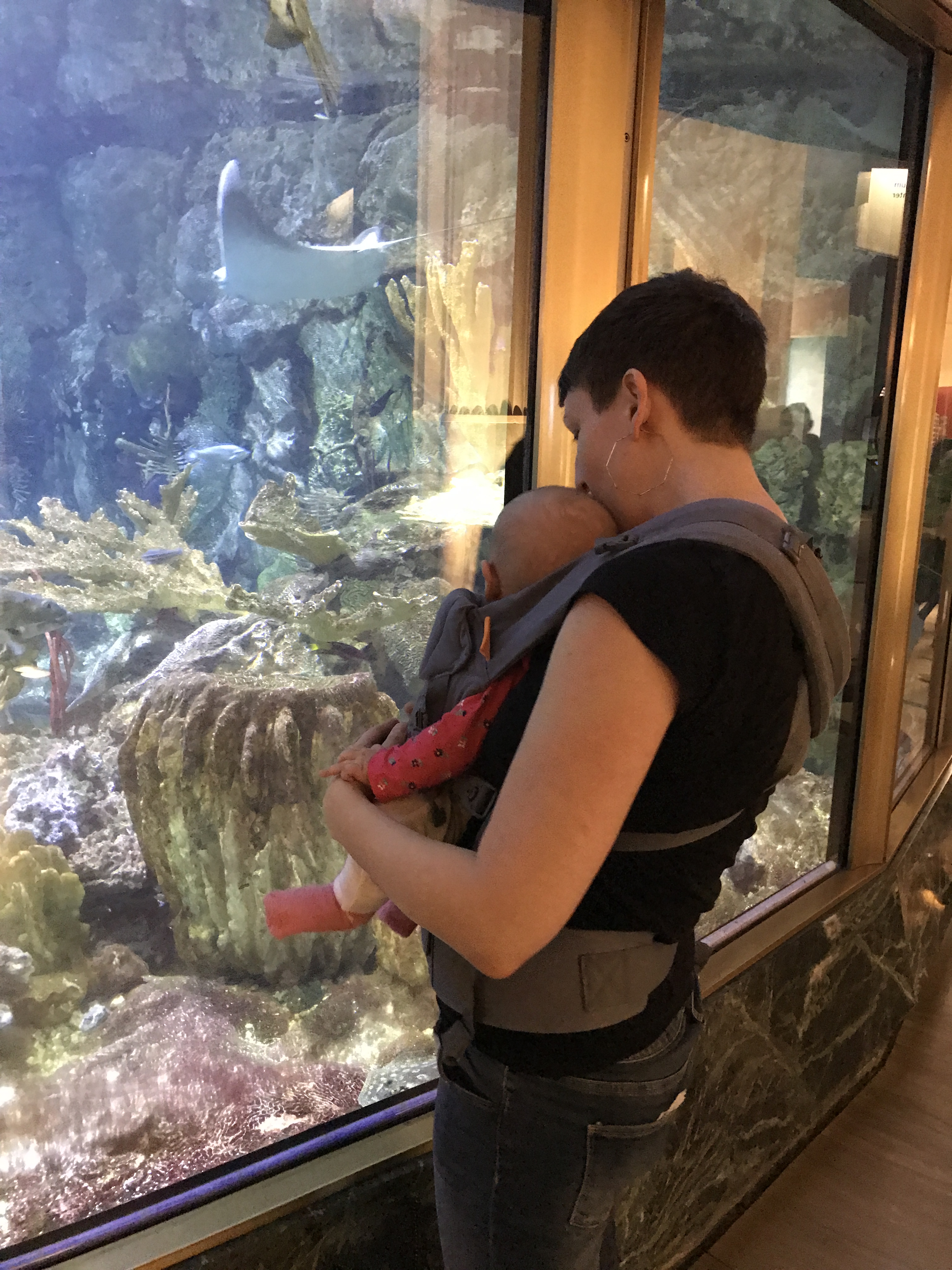
I am a queer, white, middle class, able-bodied mama currently living in Chicago. My partner and I are raising our toddler and two cats while building community and fighting for a better world.

Thanks for joining me on this journey!